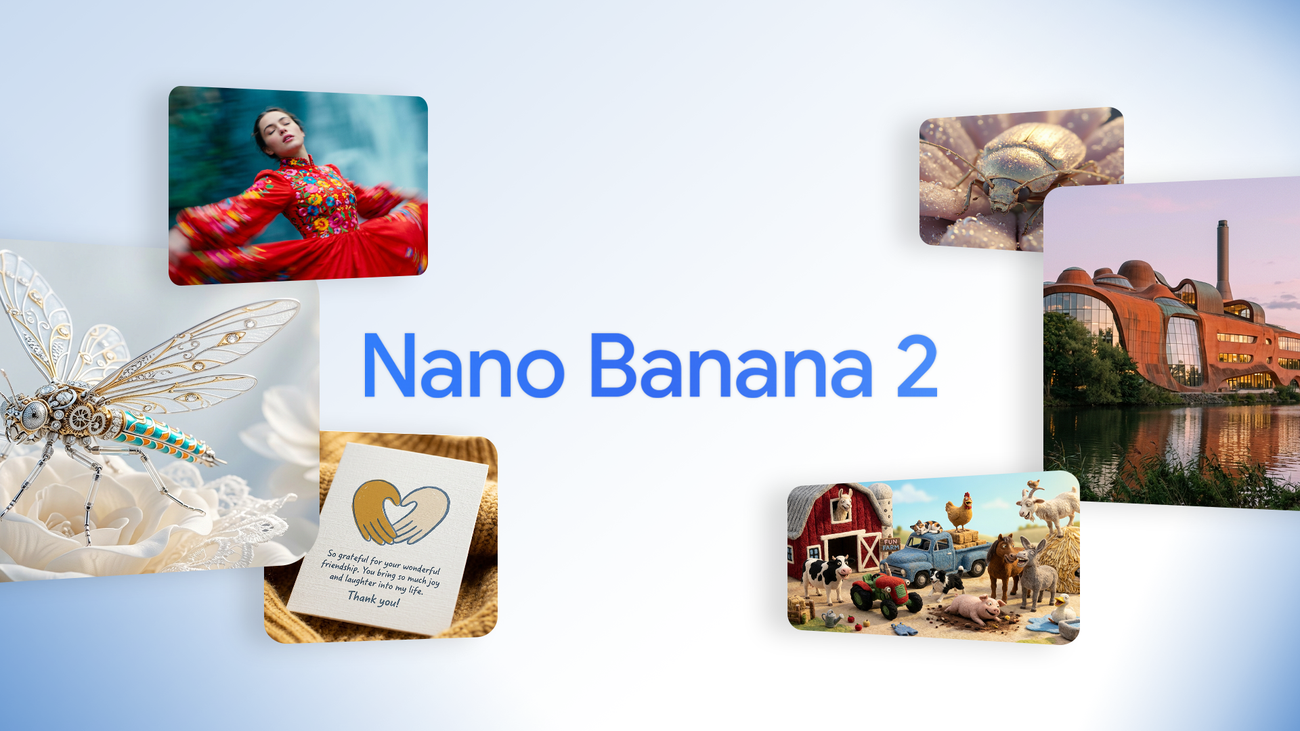
FLUX.2 vs GPT Image 2 vs Seedream 4.5 vs Nano Banana 2: The 2026 AI Image Model Showdown

The short answer first (as of July 27, 2026): no single model wins speed, quality, text, and price at the same time. Want sub-second generation you can self-host? FLUX.2 [klein]. Need flawless posters, UI screenshots, and multilingual text? GPT Image 2. Want to feed 10 reference images for character-consistent composites? Seedream 4.5. Want free, web-connected generation that turns notes into infographics? Nano Banana 2. Here’s the 30-second overview.
Selection rule: pick the scenario first, then the model — never the other way around. Text-heavy posters lean GPT Image 2; batch output lives or dies on speed and per-image cost; character consistency comes down to reference-image count.
Overview: four models at a glance
| Model | Vendor | Released | Best at | Speed | Max resolution | Open & commercial |
|---|---|---|---|---|---|---|
| FLUX.2 [klein] | Black Forest Labs | 2026-01-15 | Sub-second gen + local hosting | ⚡ Sub-second | 4 MP (~2048×2048) | ✅ 4B is Apache 2.0 |
| GPT Image 2 | OpenAI | 2026-04-21 | Complex reasoning + text | Slower (thinks first) | 2K | ❌ API only |
| Seedream 4.5 | ByteDance | 2025-12 | Multi-reference composites + dense text | Medium | 2048×2048 | ❌ API only |
| Nano Banana 2 | 2026-02-26 | Free + web-connected + infographics | Fast | High-res | ❌ Gemini/API only |
These 4 don’t really overlap: FLUX.2 is “fast + open,” GPT Image 2 is “accurate + smart,” Seedream 4.5 is “controllable + Chinese-friendly,” and Nano Banana 2 is “free + connected.” Let’s unpack each.
FLUX.2 [klein]: sub-second images you can run on your own server
Black Forest Labs shipped FLUX.2 [klein] on January 15, 2026, aimed at interactive, real-time use. It’s one of the fastest families out there — generating and editing images in under a second without a real quality hit.
There are two variants, and the license difference matters:
- 4B distilled: generates in just 4 inference steps, fits in ~13GB of VRAM, and ships under Apache 2.0 — commercial use is straightforward.
- 9B flagship: higher quality but needs more VRAM, and uses a non-commercial license.
Resolution runs from 64×64 up to 4 megapixels (e.g., 2048×2048), with dimensions as multiples of 16. Beyond text-to-image, klein supports image editing and multi-reference composition. BFL also provides FP8 and NVFP4 quantized checkpoints that cut VRAM by roughly 40% and 55% on RTX 5080/5090.
Practical rule: if your product needs “tap and see an image instantly,” or compliance/cost forces you to self-host, the FLUX.2 [klein] 4B is about the only option combining open weights, commercial licensing, and sub-second speed.
GPT Image 2: the first model that reasons before it draws
OpenAI released GPT Image 2 on April 21, 2026, with ChatGPT access from April 22 and the API opening in early May. Its headline breakthrough isn’t image quality — it’s native reasoning (thinking) built into the architecture. Before generating, it researches, plans, and reasons about the image structure, making it the industry’s first truly “agentic” image model.
What it does:
- Up to 2K output, 9 aspect ratios, and up to 8 images per prompt.
- Much stronger text rendering, especially non-Latin scripts — Japanese, Korean, Chinese, Hindi, and Bengali all render legibly.
- Within 12 hours it topped every category on the Image Arena leaderboard, leading by +242 points — the largest margin ever recorded there.
The cost is speed: because it “thinks before it draws,” it’s noticeably slower than distilled models, and it’s closed, API-only.
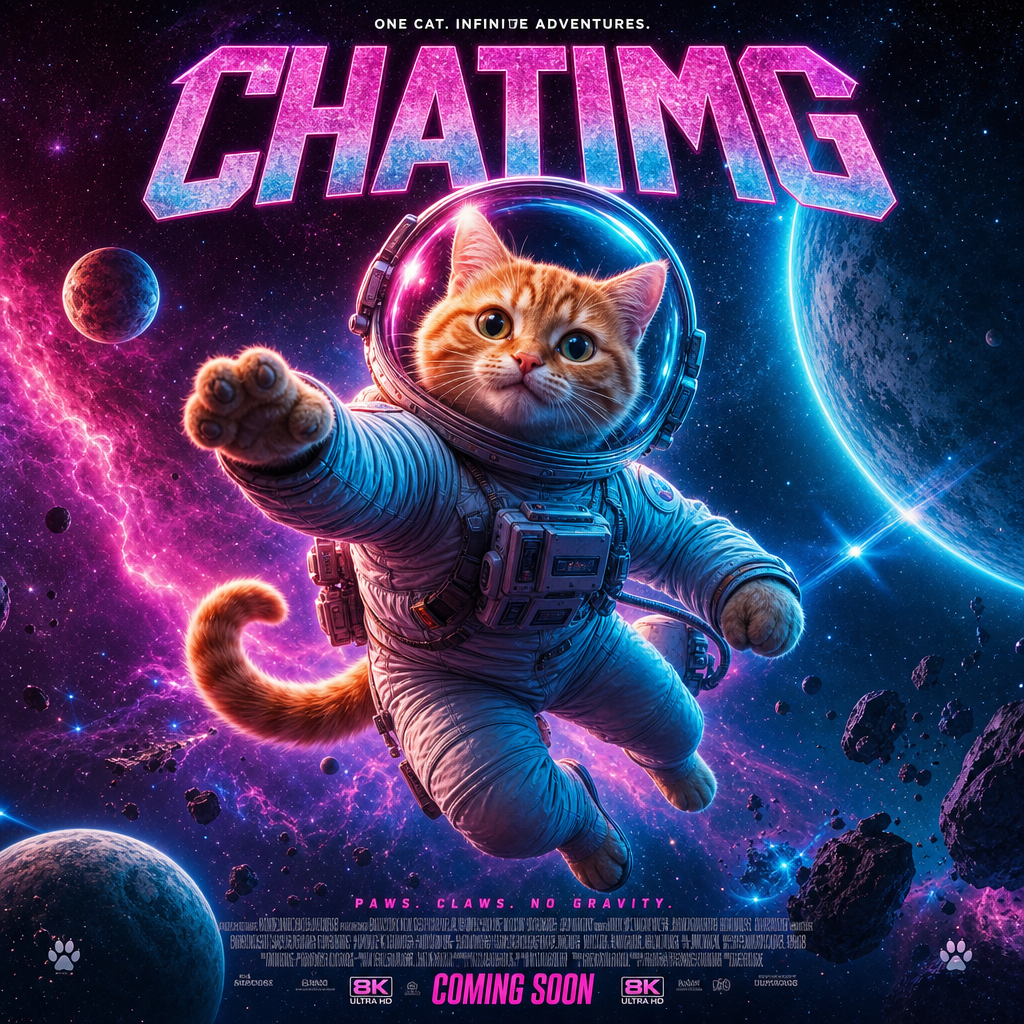 Example: an AI-generated poster — text rendering is the dimension where today’s flagship models pull apart.
Practical rule: when you need large chunks of accurate text inside the image (movie posters, product UI mockups, multilingual marketing art), GPT Image 2 is currently top-tier; for raw speed and cost it isn’t your first pick.
Seedream 4.5: 10 reference images at once, Chinese-friendly
ByteDance’s Seedream 4.5 launched in December 2025. Its edge is controllability:
- Up to 2048×2048 output across 1:1, 16:9, 9:16 and more.
- A single request accepts up to 10 reference images — great for multi-source compositing and character consistency.
- A 10,000-token prompt context window fits very detailed natural-language descriptions.
- Dense, accurate text rendering plus improved subject recognition and reference fidelity.
- Ranked #10 on the global LM Arena leaderboard (score 1147); third-party pricing runs about $0.04/image.
Practical rule: when you need “one character, a whole set of style-consistent images,” reference-image count is the hard metric — and 10 references give Seedream 4.5 the edge on e-commerce detail shots, comic panels, and IP merch.
Nano Banana 2: free, web-connected, notes into infographics
Google unveiled Nano Banana 2 (Gemini 3.1 Flash Image) on February 26, 2026, and made it free to the public. Its differentiator is being connected:
- Faster high-resolution generation with improved text rendering and multi-language support.
- Live Google Search integration — it pulls facts and images from real-world knowledge to render specific subjects (real people, landmarks, products) more accurately.
- It can build infographics, turn notes into diagrams, and generate data visualizations.
- It can translate and localize text inside an image — one marketing asset becomes many languages.
- The later Nano Banana 2 Lite (June 30, 2026) makes an image in about 4 seconds at $0.034 — built for high-volume pipelines.
Practical rule: if you want to try for free, or need “fact-grounded” images (turning a research note into an infographic), Nano Banana 2’s web connection is the one thing the other three don’t have.
The five-dimension breakdown
| Dimension | FLUX.2 [klein] | GPT Image 2 | Seedream 4.5 | Nano Banana 2 |
|---|---|---|---|---|
| Generation speed | ⚡ Sub-second | Slower | Medium | Fast |
| Text rendering | Good | 🏆 Best (incl. non-Latin) | Dense & accurate | Good, in-image translation |
| Reference/editing | Multi-ref + editing | Editing + 8/prompt | 🏆 10 references | Editing + web-sourced |
| Price | Open self-host ≈ compute cost | Higher (API) | ≈$0.04/image | 🏆 Free / Lite $0.034 |
| Self-hostable | ✅ 4B Apache 2.0 | ❌ | ❌ | ❌ |
Practical rule: paste this table at the top of your spec — each column has a single clear winner, which means the real choice is “which column can you least afford to compromise on.”
Pick by scenario: a list you can copy
- Sub-second interaction, self-hosting → FLUX.2 [klein] 4B (Apache 2.0).
- Sharpest posters/UI/multilingual text → GPT Image 2.
- Character consistency, batches of the same subject → Seedream 4.5 (10 references).
- Free, web-connected infographics → Nano Banana 2.
- Chinese-prompt-friendly + cheap → Seedream 4.5 or Nano Banana 2.
If you want a more systematic, hands-on test across quality / text / editing / speed / price, read our earlier deep dive alongside this one: How to choose among 2026’s top AI image generators — 7 models tested.
You picked a model — now what? The pain is in editing, not generating
The maddening part is never the first image — it’s the second and third rounds of tweaks: one extra finger, text out of alignment, a background to swap, just the subject’s color to change. The old workflow forces you to rewrite a long prompt, and changing one detail often rerolls the whole image.
That’s the problem ChatIMG.ai set out to fix — turning “writing prompts” into “chatting to edit.” No memorized incantations of parameters; just talk like you would to a person: “make the cup on the left red,” “bigger text,” “change the background to night.” Under the hood it taps multiple advanced image models and routes automatically, so you focus on what you want and the model handles how to draw it.
We wrote separately on how “chatting your way to a finished edit” actually works: Why image editing is shifting from prompts to conversation (coming soon). Want to try it now? Open ChatIMG.ai — no login required.
FAQ
Q1: Which of these four is fully free? Nano Banana 2 is free to the public in the Gemini app; the FLUX.2 [klein] 4B is open source (Apache 2.0), so self-hosting only costs compute; GPT Image 2 and Seedream 4.5 are paid APIs.
Q2: For accurate Chinese/Japanese/Korean text inside images, which one? GPT Image 2’s non-Latin text rendering is currently top-tier (explicitly CJK + Hindi and more); Seedream 4.5’s dense text rendering also holds up well in Chinese. Both are worlds ahead of last year’s models.
Q3: What’s the difference between FLUX.2 [klein] 4B and 9B? 4B is the distilled version: 4-step generation, ~13GB VRAM, Apache 2.0 (commercial OK). 9B is higher quality but needs more VRAM and uses a non-commercial license. For products, start with 4B.
Q4: Best pick for “one character, a whole set of images”? Seedream 4.5 — it accepts up to 10 reference images per request, which is the strongest fit for character/product consistency.
Q5: I don’t want to research all these models — what do I do? Use a tool that already handles model routing for you. Conversational editors like ChatIMG.ai tap multiple models and pick automatically behind the scenes; you just describe what you want in plain language.
Model capabilities and release details come from each vendor’s official announcements and public benchmarks, current as of July 2026. AI models iterate fast — always defer to the latest official info.
Sources:
More in this series
- AI Chat Image Workflow 2026: From Conversation Prompts to Publish-Ready Assets
- GPT Image 2 Official Site vs Online Free Access (2026 Guide)
- GPT Image 2 Prompt Best Practices 2026: Readable Poster Text First
- How to Use GPT Image 2 Free Online 2026: No ChatGPT Plus Required
- 9 Coherent Comic Panels in One Shot: AI Storyboarding with Seedream 4.0