Farbtyp bestimmen mit KI: 12 Prompts für die eigene Farbanalyse (2026)

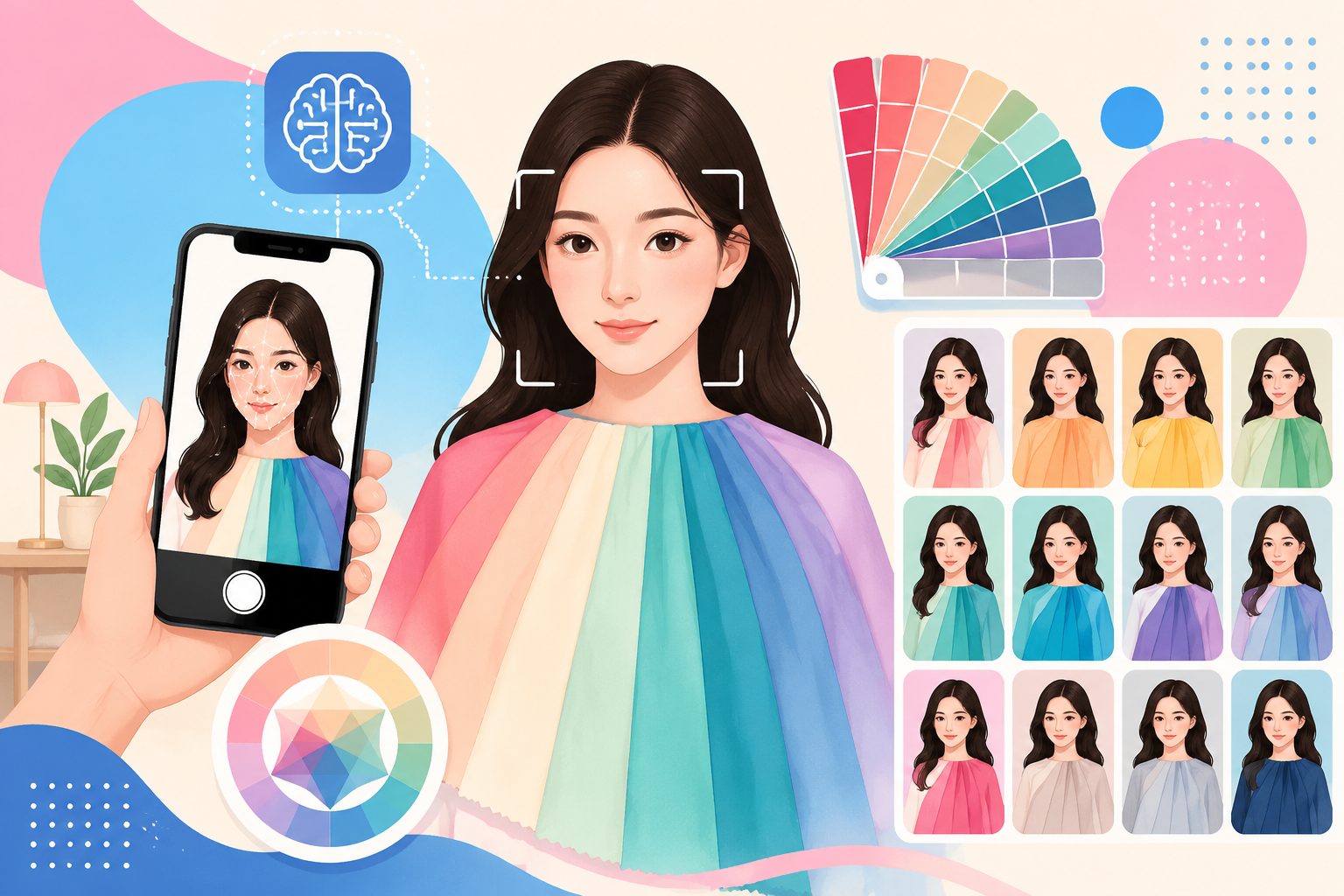
Die persönliche Farbanalyse - im Netz meist “Personal Color” genannt - stammt ursprünglich aus Südkorea, wo sie seit Jahren zum Alltag gehört. Inzwischen ist der Trend in Europa angekommen: Farbberatung wird auf TikTok erklärt, in Boutiquen angeboten und von Stylistinnen weltweit genutzt. Eine professionelle Beratung im deutschsprachigen Raum kostet je nach Studio und Umfang meist einen dreistelligen Eurobetrag und dauert ein bis drei Stunden.
Eine KI-Analyse ersetzt das nicht vollständig - aber sie liefert in wenigen Sekunden eine brauchbare Ausgangshypothese, mit der du im Laden gezielter probieren kannst. Entscheidend ist dabei der Prompt: “Welcher Farbtyp bin ich?” bringt Rateergebnisse, eine strukturierte Anweisung mit Analysekriterien bringt eine begründete Einschätzung.
Warum die Prompts englisch sind: Bildmodelle arbeiten mit englischen Anweisungen präziser. Jeder Prompt enthält deshalb die Zeile, dass die Antwort auf Deutsch ausgegeben werden soll - du kopierst den englischen Block und liest ein deutsches Ergebnis.
Checkliste vor dem Start:
- Frontales Selfie bei Tageslicht, wenig Make-up, Haare zurück, kein Filter
- ChatIMG.ai öffnen - fünf Generierungen täglich ohne Anmeldung
- Für die reine Analyse eignet sich GPT-Image-2, für Make-up- und Haarsimulationen Nano Banana 2
Wie bestimme ich meinen Grundfarbtyp?
Mit drei aufeinander aufbauenden Prompts: erst die vier Jahreszeiten, dann die feinere 12-Typen-Einteilung, dann die persönliche Auswertung. Fang immer mit dem einfachsten an - eine falsche Grundzuordnung macht jede Verfeinerung wertlos.
Prompt 1: Die vier Jahreszeiten
Analyse the person in this photo and determine which of the four seasonal
colour types fits best: bright spring (warm), soft summer (cool),
deep autumn (warm), clear winter (cool). Evaluate these criteria:

1. Skin undertone (yellow / neutral / pink)
2. Eye colour and its clarity
3. Natural hair colour and depth
4. Natural lip colour

Combine all four into a single verdict, then give three defining features
of that type and five recommended make-up colours.
Answer in German and include your reasoning for the verdict.
Prompt 2: Die 12-Typen-Analyse
Assign this person to exactly one of the twelve personal colour types:
Light Spring, True Spring, Bright Spring, Light Summer, True Summer,
Soft Summer, Soft Autumn, True Autumn, Dark Autumn, Bright Winter,
True Winter, Deep Winter.

Assess these three axes explicitly:
- Value (light vs deep)
- Chroma (clear vs muted)
- Temperature (warm vs cool)

Then give the final type, a palette of five hex codes, and three colours
to avoid. Answer in German.
Prompt 3: Farbtyp und Persönlichkeit
Using the sixteen-type system (four seasons x four sub-tones), analyse this
photo together with the personality type I provide.

[attach selfie] + [my personality type, e.g. INFJ]

Return:
1. The exact type name
2. Three fashion directions that suit this type and personality combination
3. Five public figures with a comparable colouring
4. One caption I could use when sharing the result on social media

Answer in German, in a friendly and practical tone.
Welche Prompts helfen bei Make-up und Haarfarbe?
Diese drei übersetzen das Analyseergebnis in konkrete Produkte und Simulationen - der Schritt, an dem die meisten Farbberatungen erst nützlich werden.
Prompt 4: Lippenstift-Empfehlungen
Analyse this selfie, determine the personal colour type, and recommend five
lipstick shades that are actually available in German drugstores and
perfumeries. Draw from brands such as Catrice, Essence, Maybelline,
L'Oreal Paris, NYX, Dior or Charlotte Tilbury.

For each recommendation give: brand, exact shade name or number, colour
family, and why it works for this colour type. Answer in German.
Prompt 5: Alltags-Make-up simulieren
Determine this person's colour type, then generate an image showing a
natural everyday make-up look for that type. Include:

- Base tone (light beige / golden / rosy)
- Eyeshadow as a three-colour gradient
- Blush placement and colour
- One lipstick shade
- A suggested hair colour direction

Keep the original face, expression and angle unchanged; only apply
make-up and hair colour. Add a short caption in German.
Prompt 6: Haarfarben vergleichen
Simulate three hair colours that suit this person's colour type. For each:

1. A realistic salon shade (ash brown, dark chocolate, caramel, cool
   blonde, deep espresso or similar)
2. Whether highlights or lowlights are used
3. How the shade interacts with the skin undertone

Output the three results side by side for comparison. Keep face,
expression and angle identical. Label each variant in German.
Wie finde ich passende Outfits und Anlasskleidung?
Die nächsten drei Prompts übertragen die Palette auf den Kleiderschrank - inklusive Anlässen, die im deutschsprachigen Alltag tatsaechlich vorkommen.
Prompt 7: Bürolook
Based on this person's colour analysis, propose three office outfits for a
European workplace. Each set: top, bottom, outerwear, bag colour.

Constraints:
- Restrained colours that work across seasons
- Central European business-casual dress code
- Shades that are realistically available at high-street retailers such as
  COS, Zara, Uniqlo, Mango or H&M

Answer in German with concrete colour names.
Prompt 8: Anlässe und Festliches
Based on the colour analysis, recommend colours for these occasions:

1. First date in a bright cafe
2. Formal dinner, evening lighting
3. Guest at a civil wedding
4. Company Christmas party
5. Traditional dress (Dirndl or Trachtenjanker) - fabric and trim colours

For each: colour codes, garment types, and accessory metal tone
(gold, silver or rose gold). Answer in German.
Prompt 9: Stilvorbilder finden
Suggest five public figures - actors, musicians or presenters known in
Europe - whose natural colouring is close to this person's type.

For each: what makes the colouring comparable, one signature look that is
easy to adapt, and three concrete make-up or styling takeaways.
Answer in German and avoid claiming any official endorsement.
Wie teile ich das Ergebnis oder analysiere mehrere Personen?
Die letzten drei Prompts sind für den Alltag danach: teilbare Ergebniskarten, Gruppenanalysen und der Abgleich mit aktuellen Trendfarben.
Prompt 10: Teilbare Ergebniskarte
Turn this colour analysis into a 1080x1350 social media card. Layout:

- Top: the type name, e.g. "True Winter"
- Centre: the selfie plus a five-swatch palette with hex codes
- Bottom: one line of make-up advice and five hashtags

Minimal design, high contrast, all visible text in German,
ready to post without further editing.
Prompt 11: Gruppenanalyse
From this group photo, analyse each person's colour type separately.
Format:

[Person 1] - season + twelve-type name
[Person 2] - season + twelve-type name
[Person 3] - season + twelve-type name
[Person 4] - season + twelve-type name

For each: three key colours. Then add one line suggesting a coordinated
colour combination for group photos. Answer in German.
Prompt 12: Trendfarben abgleichen
From the current season's trend colours (for example Mocha Mousse, Butter
Yellow, Cherry Red, Sage Green, Lavender), pick the three that best suit
this person's colour type.

For each colour give:
- The code (Pantone or hex)
- Why it matches this type
- One practical use: clothing, make-up, nails or accessories

Finish with one recommended purchase for this season. Answer in German.
Wie genau ist eine KI-Farbanalyse wirklich?
Auf Ebene der vier Jahreszeiten ist sie brauchbar, bei der feinen 12-Typen-Einteilung deutlich unsicherer. Das ist keine Schwäche des Prompts, sondern der Vorlage: Weißabgleich, Bildschirmfarbe und Kameraprofil verschieben Hauttöne messbar.
Aus Korea, wo die Methode entstanden ist, gibt es Vergleichsmessungen zwischen Studio- und KI-Ergebnis - dort lagen beide bei den vier Jahreszeiten häufiger beisammen als bei den zwölf Typen. Übertrage diese Zahlen aber nicht ungeprüft auf eine Beratung in Berlin oder Wien: Andere Lichtverhältnisse, andere Methodik, andere Vergleichsgruppe.
Praktisch heißt das: Nutze das KI-Ergebnis als Hypothese, nicht als Urteil. Nimm die Palette mit ins Geschäft, halte drei Stoffe ans Gesicht und prüfe im Tageslicht, welcher davon die Augenringe verschwinden lässt.
Häufige Fragen
Brauche ich unbedingt ein Selfie?
Ohne Foto sinkt die Aussagekraft stark, weil der Hautunterton visuell bestimmt wird. Eine reine Textbeschreibung liefert bestenfalls eine grobe Tendenz.
Welches Licht ist das richtige?
Indirektes Tageslicht am Fenster, weder Sonne im Gesicht noch Deckenlicht. Kunstlicht färbt den Unterton und verschiebt das Ergebnis systematisch ins Warme.
Warum bekomme ich unterschiedliche Ergebnisse?
Meist liegt es an unterschiedlichen Fotos, nicht am Modell. Analysiere zwei bis drei Selfies aus derselben Session und nimm den Typ, der mehrfach auftaucht.
Kann ich die Prompts auf Deutsch schreiben?
Du kannst, aber die englische Fassung ist präziser in der Ausführung. Die eingebaute Zeile sorgt dafür, dass die Antwort trotzdem auf Deutsch kommt.
Ersetzt das eine echte Farbberatung?
Nein - eine persönliche Beratung arbeitet mit standardisierten Stofftüchern unter kontrolliertem Licht. Die KI-Analyse ist die günstige Vorstufe, die dir zeigt, ob sich der Termin lohnt.
Wie viele Analysen sind kostenlos?
Fünf Generierungen täglich auf ChatIMG.ai ohne Anmeldung. Setze sie lieber auf zwei gute Selfies an als auf zehn schlechte.
Nächster Schritt
Kopiere Prompt 1, hänge dein Selfie an und starte auf ChatIMG.ai. Wenn die Jahreszeit steht, geh zu Prompt 2 und danach zu den Anwendungen.
Weiterlesen:
ChatIMG.ai Team